
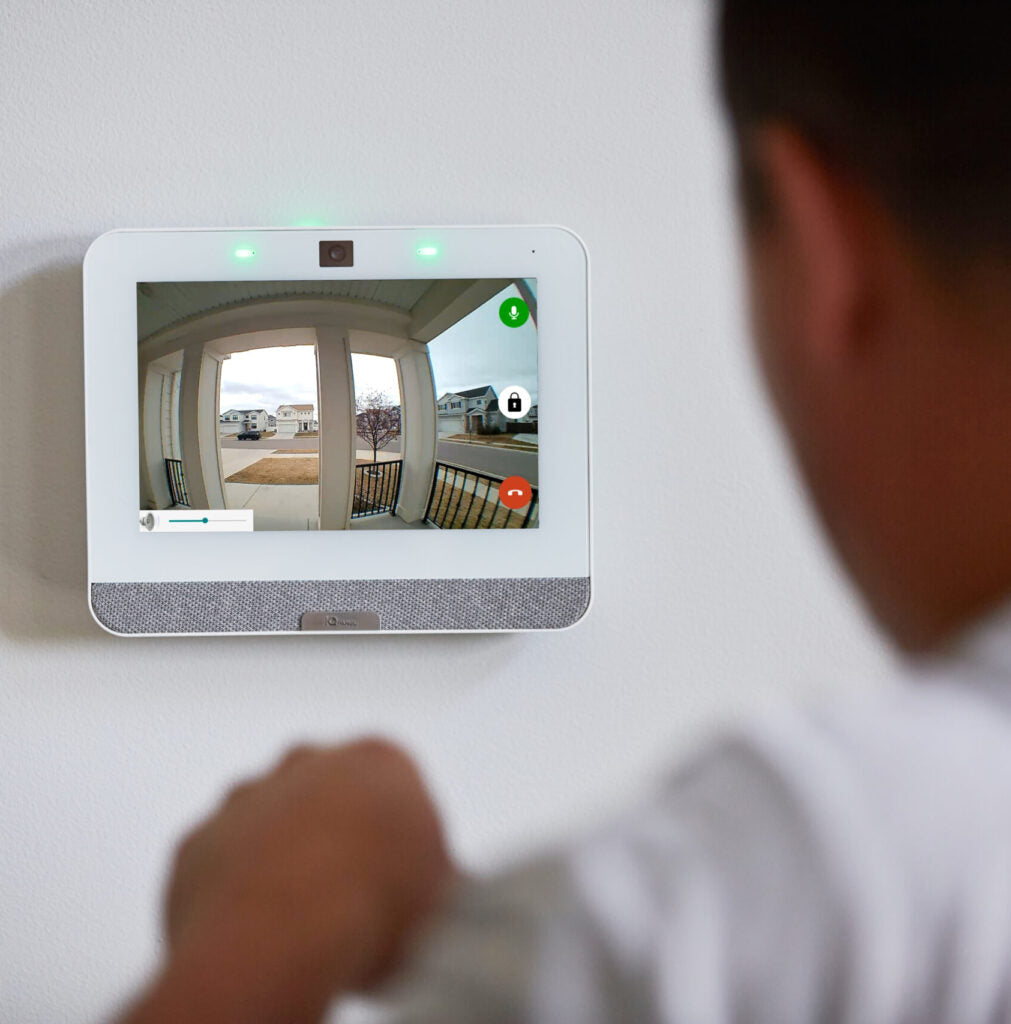

Artificial intelligence is changing the way modern security systems protect homes and businesses. Today’s systems can do much more than simply sound an alarm when a sensor is triggered or record video when motion is detected.
AI allows security technology to better understand what is happening, identify important events, and help property owners respond faster while reducing unnecessary alerts.
Smarter Video Surveillance
One of the biggest advancements in security has been AI-powered video analytics.
Traditional cameras may detect motion whenever something moves in front of them. That could mean a person, vehicle, animal, tree branch, or even changing shadows.
Modern AI-enabled cameras can do much more.
Depending on the system, video analytics may be able to distinguish between:
- People
- Vehicles
- Animals
- Specific areas of activity
- Objects remaining in or leaving an area
- Activity occurring during certain times of the day
Instead of receiving an alert every time something moves, users can receive more meaningful notifications based on the events that actually matter.
For example, a business owner might want an alert when a person enters a restricted area after closing, while a homeowner may want to know when someone approaches the front door.
More Useful Security Alerts
AI can also help make security notifications more useful.
Modern security systems generate a tremendous amount of information. Door sensors, motion detectors, cameras, access devices, and other connected equipment can all produce events throughout the day.
AI-assisted technology can help analyze those events and determine which activity deserves attention.
Rather than overwhelming users with notifications, a properly configured system can prioritize important events and provide more useful information about what is happening.
The goal isn't simply to generate more alerts. It's to generate better alerts.
Reducing False Alarms
False alarms remain an important concern with security systems.
While no technology can eliminate them completely, smarter sensors, video verification, and intelligent event analysis can help provide additional context before someone responds to an alarm.
For example, video associated with an alarm event may help determine whether activity appears to involve an actual person on the property rather than an environmental condition or accidental activation.
Better information can help homeowners, businesses, and monitoring professionals make more informed decisions.
AI and Commercial Security
AI can be especially valuable for commercial properties.
Businesses frequently need to monitor large areas, parking lots, entrances, warehouses, restricted spaces, and other locations where continuously watching every camera is unrealistic.
Intelligent video analytics can help identify activity that matches predefined conditions.
A business could configure its security system to pay particular attention to:
- People entering restricted areas
- Activity around entrances after business hours
- Vehicles entering designated locations
- Movement around valuable equipment
- Activity in normally unoccupied areas
Instead of requiring someone to constantly watch a wall of camera feeds, the system can help draw attention to events that may require review.
AI Doesn't Replace Good Security Design
Artificial intelligence is powerful, but it isn't a substitute for properly designing a security system.
Cameras still need to be positioned correctly. Door and window sensors need to protect the appropriate openings. Motion detectors need to be selected and installed based on the environment. Alarm communication and monitoring options need to match the property's requirements.
AI works best when it is part of a well-planned security system.
The foundation remains the same: select the right equipment, place it correctly, configure it properly, and make sure the system is designed around the property being protected.
Security Systems Will Continue Getting Smarter
Security technology is moving toward systems that don't simply collect information—they help interpret it.
As AI continues to develop, homeowners and businesses can expect security systems to become better at identifying relevant activity, filtering unnecessary notifications, and delivering useful information when something happens.
That means the future of security isn't necessarily about adding more cameras or sensors.
It's about making the equipment you have smarter and more useful.
At Catawba Security, we believe a security system should be designed around the property and the people using it. The right combination of alarm equipment, intelligent video, cloud-connected technology, and professional monitoring options can provide a smarter approach to protecting what matters.


