

Creating a safe learning environment requires more than simply installing cameras or locking doors. Effective school security is built around multiple layers of protection that help prevent unauthorized access, improve situational awareness, and allow staff to respond quickly when an incident occurs.
Whether protecting an elementary school, high school, daycare, private school, or other educational facility, a well-designed security system should combine physical security, electronic security, clear procedures, and properly trained personnel.
Control Access to School Buildings
Controlling who can enter the building is one of the most important parts of school security.
Whenever possible, schools should limit normal visitor access to a designated main entrance. Exterior doors should remain secured during school hours while still allowing safe emergency egress from inside the building.
Electronic access control can provide additional protection by allowing schools to manage who is authorized to enter certain doors and when. Depending on the system, administrators may also be able to quickly change access permissions when an employee leaves or a credential is lost.
Schools should regularly inspect exterior doors, locks, door closers, and related hardware to make sure doors close and secure properly.
Use Video Surveillance Strategically
Security cameras can provide valuable visibility throughout a school campus, but proper camera placement is just as important as the number of cameras installed.
High-priority areas may include:
- Main entrances and visitor entrances
- Exterior doors
- Parking lots and vehicle entrances
- Hallways and common areas
- Building perimeters
- Playgrounds and athletic areas
- Loading and delivery areas
- Areas containing valuable equipment
Camera systems should provide clear images appropriate for the location being monitored. Schools should also consider recording retention, low-light performance, remote viewing capabilities, and whether administrators need immediate access to live and recorded video.
Cameras should be positioned with student privacy in mind and should not be installed in areas where there is a reasonable expectation of privacy.
Install Intrusion Detection
An intrusion detection system can help protect the school when the facility is closed.
Door contacts can monitor perimeter openings, while motion detectors and other sensors can help identify activity inside protected areas.
Larger campuses may benefit from dividing the security system into multiple areas so administrators can secure sections of the building independently. This can be especially useful when gyms, auditoriums, offices, or athletic facilities are being used after normal school hours.
Professional monitoring can provide another layer of protection by allowing alarm signals to be received and handled when school personnel are not on site.
Consider Emergency Notification and Panic Solutions
Schools should have a clearly defined method for employees to request assistance during an emergency.
Depending on the facility and security plan, this may include panic buttons, duress devices, mobile emergency notification solutions, or other methods of quickly communicating an emergency.
Emergency devices should be strategically located, easy for authorized personnel to access, and incorporated into the school's overall emergency response procedures.
Improve Visitor Management
Every school should have a consistent process for managing visitors.
Visitors should enter through a designated location and follow established procedures before receiving access to the rest of the building.
A visitor management process may include identification verification, visitor badges, sign-in procedures, staff notification, and clearly defined rules regarding where visitors may go inside the facility.
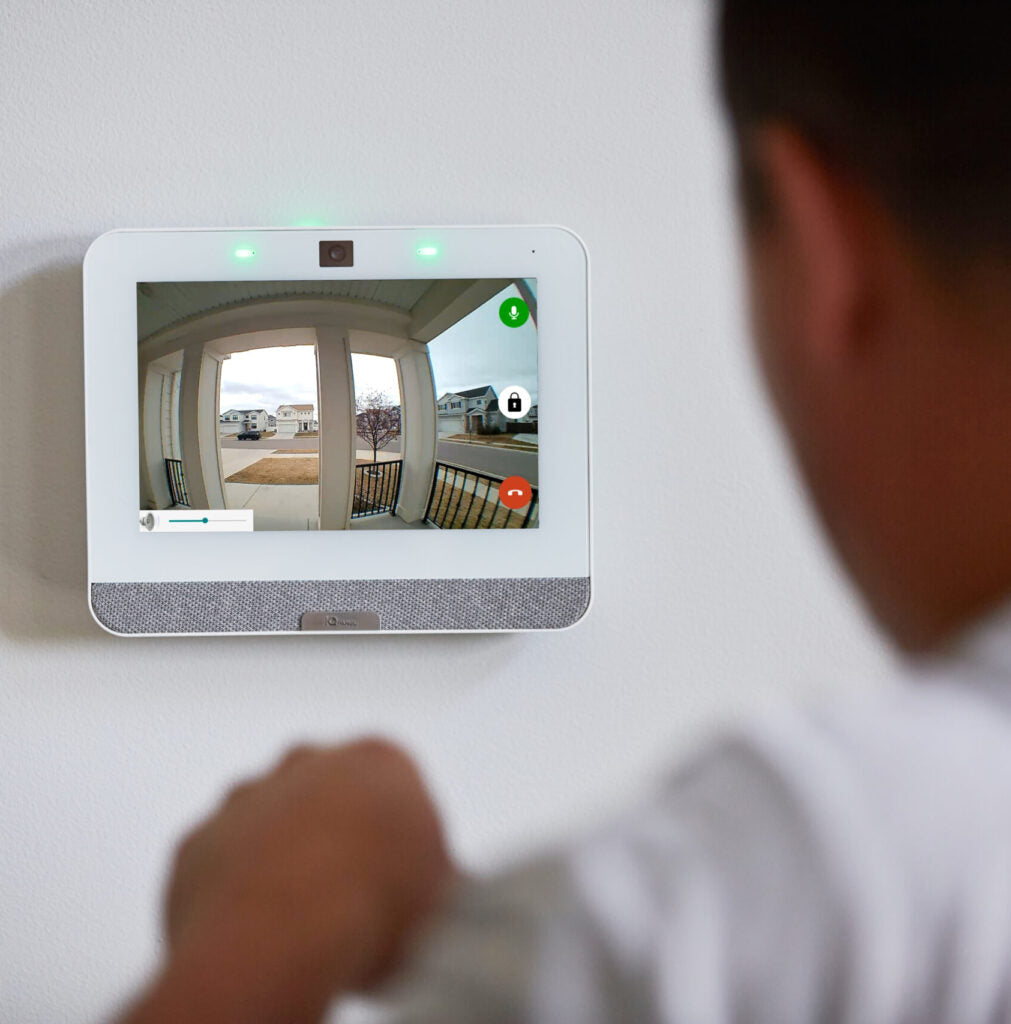
Video intercom systems can also allow office personnel to see and communicate with visitors before unlocking an entrance.
Protect More Than the Main Building
School security planning should include the entire property, not just classrooms and hallways.
Parking areas, detached buildings, athletic facilities, maintenance buildings, storage areas, playgrounds, and other exterior locations should be evaluated for potential vulnerabilities.
Lighting, fencing, landscaping, camera coverage, and access points should all be considered as part of the school's security assessment.
Maintain and Test Security Equipment
Even a well-designed security system cannot provide its intended protection if devices are damaged, improperly adjusted, disconnected, or no longer functioning correctly.
Schools should routinely test security equipment, including:
- Security cameras
- Door contacts
- Motion detectors
- Access control systems
- Electronic locks
- Panic or duress devices
- Communication systems
- Backup power systems
Administrators should also maintain accurate records of system users, access credentials, authorized personnel, and emergency contacts.
Train School Personnel
Technology is only one part of an effective security program.
Teachers, administrators, office personnel, custodians, and other employees should understand the school's security procedures and know how to report suspicious activity or security problems.
Staff should know who is responsible for security decisions, how visitors are handled, how emergency systems operate, and what procedures should be followed during different types of incidents.
Security procedures should be reviewed periodically rather than discussed only when an emergency occurs.
Use a Layered Approach to School Security
There is no single device that can address every security concern.
The strongest school security programs combine multiple layers, including:
Access Control — Helps prevent unauthorized entry.
Video Surveillance — Provides visibility and recorded evidence.
Intrusion Detection — Helps detect unauthorized activity.
Emergency Notification — Gives employees methods to request assistance quickly.
Visitor Management — Helps control and document visitor access.
Policies and Training — Make sure people know how the security systems and procedures should be used.
Each layer supports the others and can help reduce vulnerabilities throughout the facility.
Start With a Security Assessment
Every school property is different. Building layout, student population, staffing, operating hours, surrounding property, entrances, after-hours activities, and existing security equipment can all affect the appropriate security strategy.
A security assessment can help identify vulnerable areas and determine which improvements should receive the highest priority.
Rather than purchasing individual security products without an overall plan, schools should consider how cameras, intrusion detection, access control, monitoring, and emergency procedures can work together as one coordinated security solution.
At Catawba Security, we believe better security starts with choosing the right equipment and designing it around the needs of the property.


